Adriatic Sea and Weather
The Mediterranean Adriatic Sea Facts
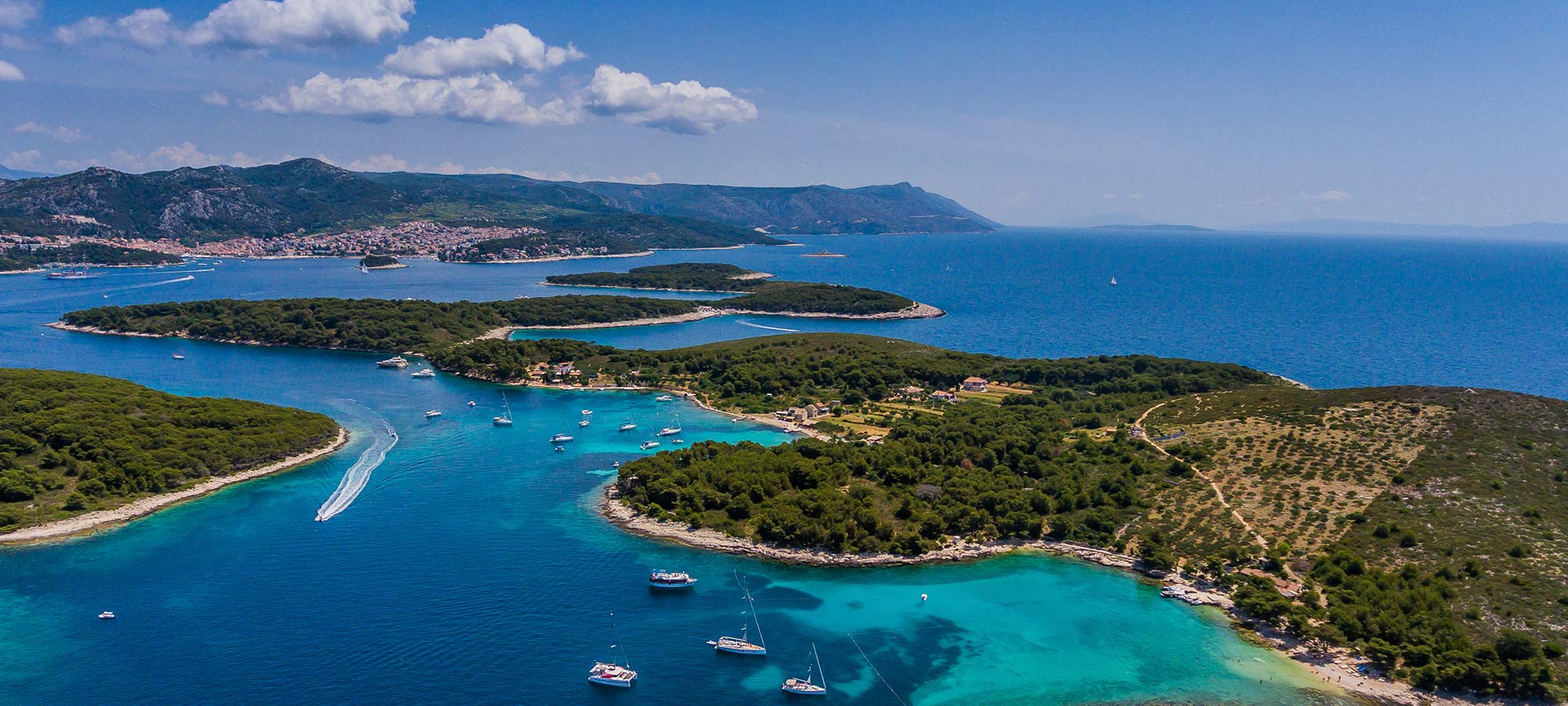
The Adriatic is the northernmost part of the Mediterranean Sea. It extends from the Strait of Otranto (where it connects to the Ionian Sea) to the northwest where it ends at the Veneto region in Italy. There are over 1,300 islands in the Adriatic and most of them are located along the Croatian coast.
Depth of the Adriatic Sea
The Mediterranean Adriatic Sea is divided into three distinct divisions in relation to the depth:
- Northern Basin: The northern reaches of the Adriatic basin in the vicinity of Istria are relatively un-deep reaching 50 meters in depth. The temperature of these warmer waters is relatively high and has numerous marine animals. Hence, the northern Adriatic sea surface is known for its fishing and other water activities.
- Central Basin: Moving south from the Istrian peninsula, the bottom topography starts to slope in a funnel like formation comprising a vertical valley that lies between Žirje island south of Slovenia and the southeastern region of Italy. The maximum depth is approximately 240 m deep. The basin's surface water is warm and under the surface water are much lower temperatures creating an environment suitable for a wide variety of marine life.
- Southern Basin: The southern Adriatic has the deepest waters, especially near the Palagruža Reef, where the seabed drops steeply to a maximum depth of 1,233 meters. This basin links closely with the Lonian Sea, bringing in deeper and colder Mediterranean currents that impact water movement and marine life diversity.
One of the most important aspects that contributes to the ecological diversity of Mediterranean Adriatic Sea is its topography since one can find a distinctive place to swim and appreciate the beauty of the aquatic life and fascinating sights for those who like diving.
Seabed of the Mediterranean Adriatic Sea
The Adriatic’s underwater landforms are characterized by the distinct processes of tectonics, erosion and sediment deposits being naturally shaped through time and history into one of the more complex regions of the seabed:
- Tectonics and Erosion: Several million years back, tectonic forces on earth’s crust lead to subsiding and uplifting of portions of the sea-floor thereby leading to emergence of the Adriatic Sea floor topography. Those parts of the Earth surface that were fresh land are all below sea level and hence have an irregular shape and contours.
- Sedimentation: Sedimentary deposits of river mouths together with sediments from coastal erosions are deposited along the floor of sea, therefore gradually raising tectonic movements and minerals complimenting the sea. Though the layering of builder materials is slow and steady, it is never ending, thus providing a setting for nutrients to settle and promote certain species of oceanic vegetation.
This dynamic seabed provides ideal habitats for marine life, supporting everything from seagrass beds to coral reefs, making the Adriatic one of the Mediterranean’s most ecologically vibrant areas.
Tides on the Mediterranean Adriatic Sea
It is to be noted that Tides in the Mediterranean Adriatic Sea are mild in amplitude and yes, they differ in their amplitude in the northern and southern part for the following reasons.
Southern Adriatic: Tides here are quite slack with the difference usually not exceeding 40 centimeters in large measure because the Adriatic sea is not deeply cut with the Mediterranean sea.
Northern Adriatic: Tidal differences are rather marked in this area with the amplitude, sometimes reaching 1m particularly in regions like Trieste gulf along the Istrian coast. Narrow channels and bays with narrow gates will mitigate high water levels themselves & hence increase local water levels when Tides are in.
Sometimes sequentially a full moon and new moon rise & tidal patterns of the Adriatic Sea create the rhythm of tides.
Sea Currents in the Mediterranean Adriatic Sea
Sea Currents in the Mediterranean Adriatic Sea Sea currents are an actual phenomenon and the main factors causing their presence include temperature, wind, pressure, and salinity differences:
Main Current Flow: The currents of the Adriatic emerge from the Istrian Peninsula along the Croatian coast and northern Adriatic, those currents then turn downwards at the Italian coast and regress Southwards.
Vertical and Bottom Currents: Vertical currents are caused when differences in temperature and density of waters between the top and bottom layers exist such that colder, denser water is the cause of a downwards flow to the sea bed. Temperature gradients also cause bottom currents, which are slow moving and move cooler layers of water beneath warmer currents The average speed of these currents is approximately 0.5 knot which is generally slow but these currents are significant because they help in the movement of heat to various locations throughout the Adriatic making the Ecosystems there richer.
Salinity of Mediterranean Adriatic Sea
The Mediterranean Adriatic sea has an average salinity of 38.3 parts per thousand (‰), figure which shows regional variability:
- Northern Adriatic: Freshwater inflow, dilutes the salinity, making the northern Adriatic less saline than the central and southern basins.
- Central and Southern Adriatic: Here, salinity is higher, closer to the overall Mediterranean average, as there is less freshwater influence.
The Adriatic receives about a third of the total freshwater entering the Mediterranean, impacting its salinity levels. This salinity gradient supports diverse marine habitats, from brackish waters near river mouths to saltier zones in deeper parts of the sea.
Mediterranean Adriatic Sea Temperature
The Mediterranean Adriatic Sea shows significant temperature changes throughout the seasons:
- Winter: The average temperature of the surface is 11 degrees Celsius which can drop to about 7 degrees Celsius in quite a few of the northern parts during cold spells.
- Spring: Temperatures begin rising and around 18 degrees Celsius implying the warmer season of the Adriatic is here.
- Summer: Surface temperatures vary from about 22 to about 25 degrees Celsius during the summer season making it the hottest season temperature for the Adriatic. To some regions to the south as well as areas around Istria, temperatures sometimes rise up to about 27 degrees Celsius creating favorable conditions for numerous water activities such as swimming and snorkeling.
Some additional temperature layering temperatures of the water from the sea such as several thermoclines which is a feature of the Adriatic Sea. Most first thermocline layer is found at 3 to 5 meter depth of water bodies while the other two are further found at 12 and 18 meters depth respectively. These thermoclines are more evident during summer season while in winter, temperature of water is almost same irrespective of the depth of water.
Waves in the Mediterranean Adriatic Sea
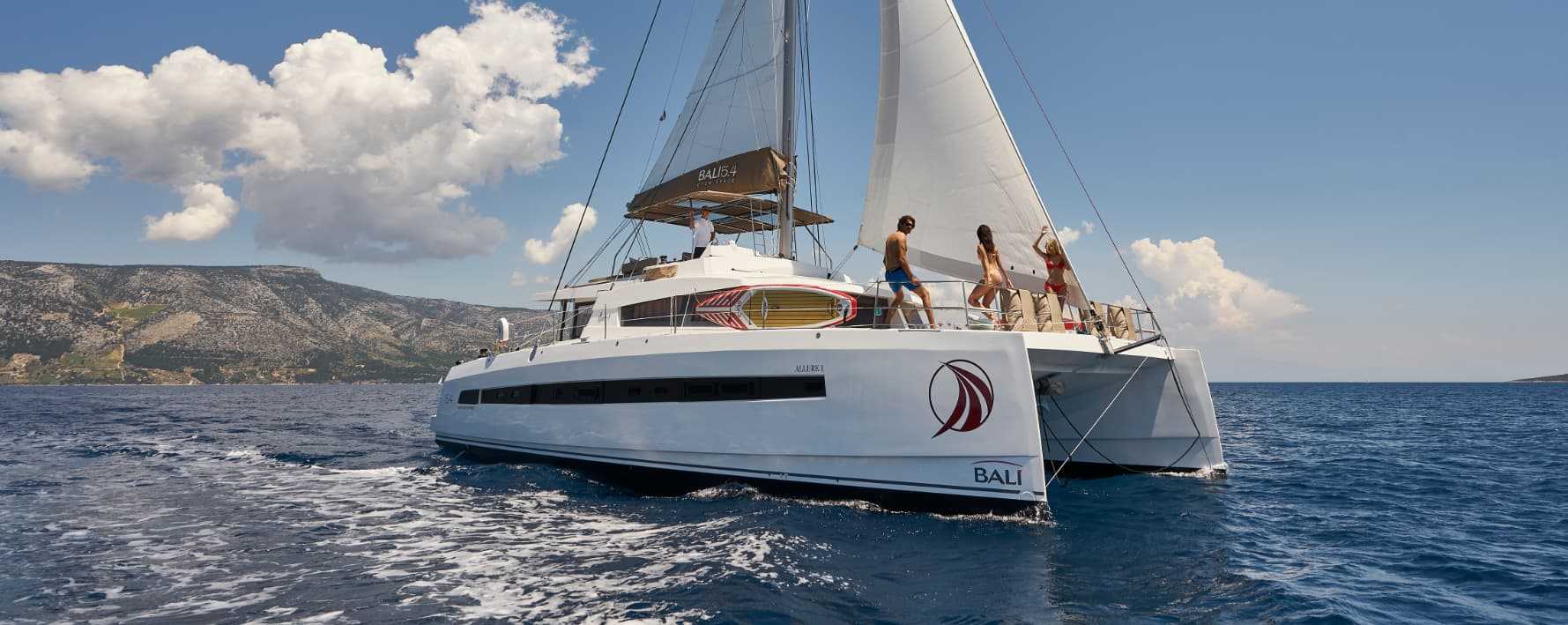
As not many waves develop in the Adriatic Sea, particularly on the Croatian coasts sheltered by large numerical islands, it often proves to be under comparatively low wave stress. This creates ideal conditions for a relaxing sailing holiday, where comfort takes priority over rough seas.
Guests can enjoy smooth cruising, peaceful anchorages, and stress-free exploration of Croatia’s stunning coastline. With calm waters and reliable weather, every journey feels safe, inviting, and perfect for unforgettable memories at sea.
The gentle sailing conditions also make Croatia a great choice for families, first-time sailors, and those seeking a more leisurely pace on the water. From sunrise to sunset, the Adriatic offers a perfect blend of serenity and adventure, making every day on board a joy.
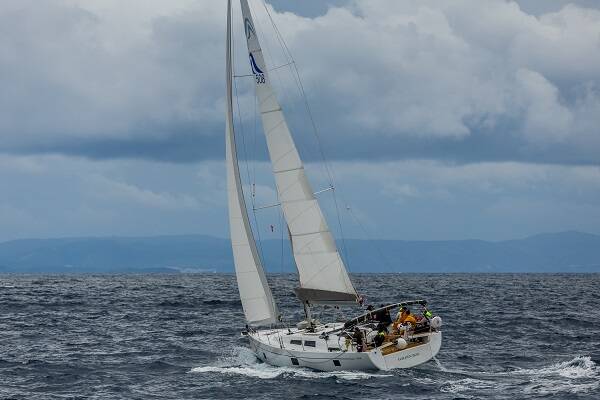
Average Wave Height: In most of the zones hitherto considered, the heights of the waves vary from 0.5 to 1.5 m only and as a result sailing and water activities remain safe and enjoyable.
Open Sea Wave Height: In the course of establishment of winter and at the jetties of the open sea, the wave heights might reach above 5m in some cases due to the strong winds, which are frequent in this area.
This makes the Adriatic Sea possibly the most navigable part of the Mediterranean with relatively lower wave activities which helps attract sailors, swimmers, adventurers, and most water activities enthusiasts all year round. The calm and predictable conditions make it an ideal destination for family sailing holidays, island-hopping trips, and first-time boating experiences. Combined with crystal-clear waters and stunning coastal scenery, the Adriatic offers a safe yet unforgettable playground for sea lovers of all kinds.
Sharks in the Mediterranean Adriatic Sea
Some species of sharks can be sighted in the Adriatic Sea, including but not limited to: the Great White Shark, blue shark, and thresher shark smooth-hound shark.
Shark Species: Although there exists some big species of sharks, shark attacks have been extremely infrequent, for the last recorded incident in Croatia was of the year 2008, while the last fatal shark attack dated back to the year1974.
The Mediterranean Adriatic Sea’s shark population is generally docile, and sightings are infrequent, making it a safe environment for swimmers and divers. However, these creatures are vital to the Adriatic’s marine food chain, helping maintain the ecological balance by controlling populations of other marine animals.
Climate and weather on the Adriatic Sea
The climate at the Adriatic is typically Mediterranean, with mild rainy winters, and hot and dry summers. The air temperature changes depending on the area. Thus, summer temperatures in July can rise up to 34°C in the northern part, while in the southern part they can rise even to 38°C. In the winter, the coldest temperatures are noticed in the northern Adriatic (even up to -16°C), while they will not have exceeded +6°C in the southern part.
Weather conditions in the Adriatic are affected by the general weather situation in the Mediterranean and local climate conditions. Generally speaking, light to moderate winds with few storms prevail until June. In July and August, a period of calm sets in and storms are more frequent. From September on winds are again stronger.
Winds on the Adriatic Sea
The bura (bora) and the jugo (scirocco) are the main winds on the Adriatic. They prevail in the winter period from September to May. The prevailing wind in the summer is the maestral. Below you can check a short summary of winds on the Adriatic Sea, but we have also prepared an in-depth guide on Adriatic winds.
Bura
The bura is a cold and dry north-easterly wind. It blows from the continent, i.e. from the eastern side of the Adriatic towards the open sea and brings bright weather. It starts abruptly and blows in squalls toward the sea. It is strongest in the Velebit Channel and the Gulf of Trieste. The picture shows typical "bura" corridors: (1) Golf of Trieste, (2) Kvarner, (3) Velebit Channel, (4) Sibenik, (5) Split - Makarska, (6) Peljesac and (7) Dubrovnik. In the summer the bora blows as a local wind and lasts only a few days. In the winter it may continue for up to two weeks.
Jugo
The jugo is a warm, humid east-southeast wind. It is accompanied by heavy clouds and rain. It is not a sudden wind like the bora as it takes 36-38 hours to develop. It blows throughout the Adriatic. In the summer it may appear as a local wind and is more frequent in the southern part of the Adriatic. Between March and June it blows in the north Adriatic as well.
Maestral
The maestral is a local westerly wind which blows from the sea, mostly in the summer. It usually starts between 10 and 11 in the morning and reaches its greatest strength between 2 and 3 in the afternoon to die down at sunset. It brings good weather. It is usually accompanied by white clouds. While bura and jugo each in their own way offer sailors excitement and challenge, maestral guarantees pure pleasure during which you can give yourself to the sea without fear.
Other winds
The burin, a north-easterly, blows in the summer from the mainland, usually in the morning. The tramontana is a type of bora; it is a northerly. Another type of bora is the easterly Levante. Pulenat blows from the west and lebić from the south-west. The nevera, a violent westerly, comes as a storm or squall. In the summer months, storms in the Adriatic are sudden and violent and produce a short-lasting swell. The Adriatic storms have an advantage: they do not last long and some of them leave behind pleasantly cool air. During periods of high pressure, the Adriatic also has the classical rhythm of winds: winds from the land during the night and from the sea during the day.
Weather Reports
The coastal radio stations broadcast weather reports in Croatian and English several times a day. The reports include a general weather situation report, messages and the forecast for the following 24 hours. Weather reports are broadcasted at the following UTC times (UTC + 1 h = CET; CET + 1 h = CE summer time):
- Rijeka Radio VHF Channel 24 – 05:35, 14:35, 19:35
- Split Radio VHF Channels 21, 23, 07, 28 – 05:45, 12:45, 19:45
- Dubrovnik Radio VHF Channels 04, 07 – 06:25, 13:20, 21:20
Sailing conditions on the Adriatic Sea per region
Sailing conditions in Istria
|
|
APR |
MAY |
JUN |
JUL |
AUG |
SEP |
OCT |
|---|---|---|---|---|---|---|---|
|
WIND DIRECTION |
S |
S |
SW |
W |
SW |
NE |
NE |
|
WIND SPEED (KT) |
10 |
10 |
10 |
10 |
10 |
10 |
10 |
|
AIR TEMP. (C) |
13 |
17 |
21 |
24 |
24 |
21 |
16 |
Sailing conditions in Kvarner
|
|
APR |
MAY |
JUN |
JUL |
AUG |
SEP |
OCT |
|---|---|---|---|---|---|---|---|
|
WIND DIRECTION |
E |
E |
E |
E |
W |
E |
NNE |
|
WIND SPEED (KT) |
14 |
12 |
12 |
12 |
12 |
12 |
12 |
|
AIR TEMP. (C) |
15 |
19 |
23 |
25 |
24 |
22 |
18 |
Sailing conditions in North Dalmatia
|
|
APR |
MAY |
JUN |
JUL |
AUG |
SEP |
OCT |
|---|---|---|---|---|---|---|---|
|
WIND DIRECTION |
WSW |
SSW |
WSW |
WSW |
WSW |
NNE |
NNE |
|
WIND SPEED (KT) |
16 |
16 |
14 |
16 |
14 |
16 |
16 |
|
AIR TEMP. (C) |
14 |
18 |
22 |
25 |
25 |
21 |
16 |
Sailing conditions in Central Dalmatia
|
|
APR |
MAY |
JUN |
JUL |
AUG |
SEP |
OCT |
|---|---|---|---|---|---|---|---|
|
WIND DIRECTION |
ENE |
SE |
WSW |
WSW |
WSW |
ENE |
ENE |
|
WIND SPEED (KT) |
16 |
16 |
14 |
12 |
14 |
14 |
14 |
|
AIR TEMP. (C) |
14 |
19 |
23 |
26 |
25 |
21 |
17 |
Sailing conditions in South Dalmatia
|
|
APR |
MAY |
JUN |
JUL |
AUG |
SEP |
OCT |
|---|---|---|---|---|---|---|---|
|
WIND DIRECTION |
SE |
SE |
SE |
SW |
SW |
ENE |
ENE |
|
WIND SPEED (KT) |
18 |
18 |
14 |
14 |
14 |
16 |
16 |
|
AIR TEMP. (C) |
14 |
18 |
22 |
25 |
25 |
22 |
18 |
Why is Croatian water so clear?
Croatian water is known for its clarity due to several factors. Firstly, Croatia is located on the eastern coast of the Adriatic Sea, which has relatively low levels of pollution compared to other seas. The water is also clear because of the lack of major rivers flowing into the Adriatic near Croatia, which reduces sediment and pollutants in the coastal areas. Additionally, the Adriatic Sea has a high level of water circulation, which helps to maintain its cleanliness and clarity.
How was the Croatian coastline formed?
The Croatian coastline was formed through a combination of geological processes over millions of years. It is primarily a result of tectonic activity and the movement of the Earth's crust. The coastline is characterized by a mixture of limestone, dolomite, and other sedimentary rocks that have been shaped by erosion from the sea and other natural forces.
What is the sea by Croatia called?
The sea by Croatia is called the Adriatic Sea. It is a body of water separating the Italian Peninsula from the Balkan Peninsula, and it stretches from the Strait of Otranto in the south to the Gulf of Venice in the north.
Why is the Adriatic Sea so salty?
The Adriatic Sea is relatively salty due to its limited connection with other oceans. It is a semi-enclosed sea with only narrow straits connecting it to the Mediterranean Sea. As a result, the water in the Adriatic evaporates more quickly than it can be replenished by freshwater inflow, leading to higher salinity levels
Is the Adriatic Sea warm?
In general, the Adriatic Sea is warm during the summer months, with surface temperatures ranging from around 22 to 27 degrees Celsius (72 to 81 degrees Fahrenheit) in coastal areas. During winter, the sea cools down, with temperatures ranging from around 10 to 15 degrees Celsius (50 to 59 degrees Fahrenheit).
Where is the warmest sea in Croatia?
The warmest sea in Croatia is typically found along the southern part of the country's coastline, particularly in the regions of Dubrovnik and the Dalmatian Islands. These areas benefit from the Mediterranean climate and are known for their relatively warm sea temperatures during the summer months.
Which beach in Croatia has the clearest water?
Croatia is known for its many beautiful beaches with clear water. One of the beaches often mentioned for its crystal-clear water is Zlatni Rat (Golden Horn) beach, located on the island of Brač. However, it's important to note that the clarity of the water can vary depending on weather conditions, currents, and other factors.
Is the Adriatic Sea part of the Mediterranean
Yes, the Adriatic Sea is considered part of the Mediterranean Sea. The Mediterranean Sea is a larger body of water that encompasses several smaller seas, including the Adriatic, Ionian, Aegean, and Tyrrhenian seas.
What is the myth of the Adriatic Sea?
There are several myths and legends associated with the Adriatic Sea. One notable myth is the story of the nymph named Liburna, who was said to have fallen in love with the sea god, Neretva. Liburna's unrequited love caused her to cry so much that her tears formed the Adriatic Sea. This myth reflects the ancient connection between the people of the region and their dependence on the sea for their livelihoods.